Wendy’s
- 4.7
- Rating
- 10.00M
- Installs
- Free
- Price

 Analysis by App-foxy
I installed Wendy’s because I wanted to see whether its mobile ordering experience could make a normal fast-food visit less awkward, rather than simply place a restaurant menu on a phone. My test scenario was straightforward: decide what to eat, customize an order, choose how to receive it, and arrive with as little back-and-forth as possible. That is where this Food & Drink app makes the most sense. It is free, aimed at everyone, and developed by Wendy’s Int’l., LLC, but its usefulness depends heavily on whether you regularly buy from Wendy’s and whether the restaurant you use supports the options you need.
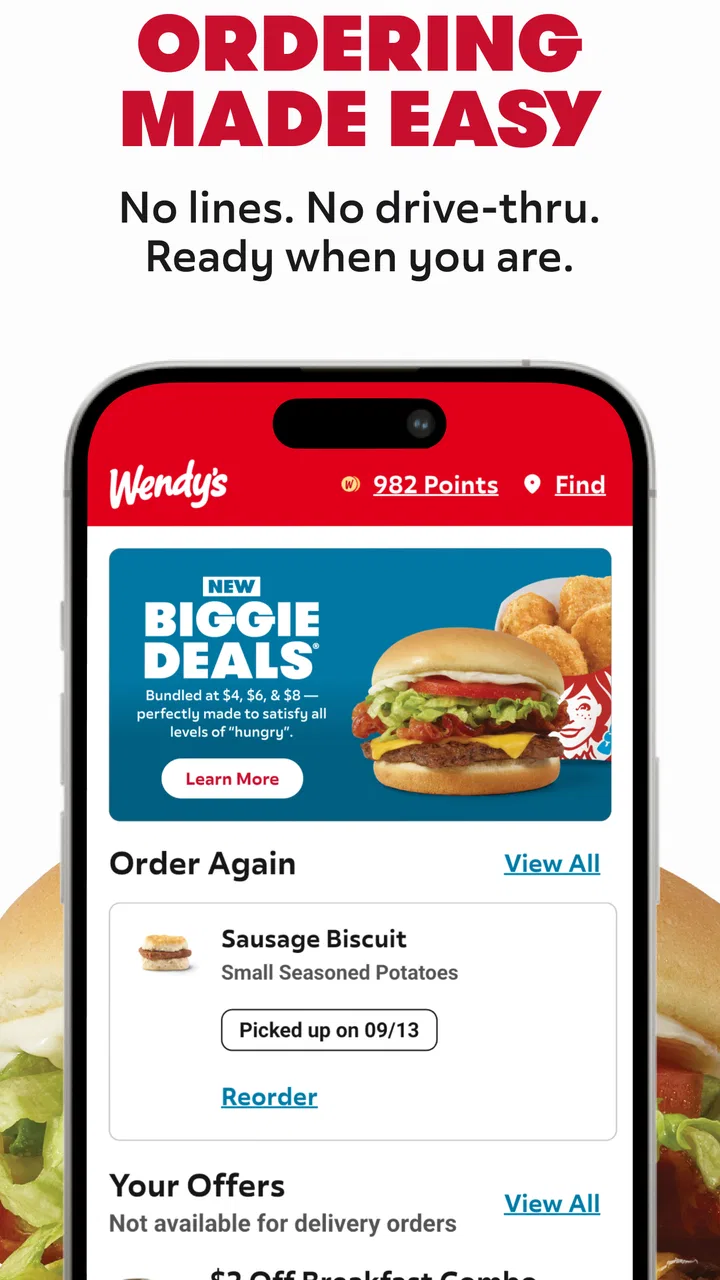
The first impression is practical rather than exciting. The app brings together ordering, rewards, and offers in one Wendy’s-focused space. I found that combination more useful than a standalone menu because it changes how I plan a visit: instead of making a choice at the counter and then remembering to ask about a deal, I can inspect the available choices before leaving home. The real benefit is reducing decisions at the restaurant, not turning a quick meal into a complicated planning exercise.
Its long presence on mobile also shows in the public response. Wendy’s has an average rating of 4.7 from around 606 thousand ratings, with roughly 64 thousand written reviews, and it has passed 10 million installs. Those figures suggest that the app is not a niche experiment. Still, a large audience does not remove the everyday issues that can appear when a digital order meets a busy restaurant, so I paid particular attention to the handoff between phone, store, and customer.
You May Also Like

 Blood Strike: 2.5 Anniversary
Blood Strike’s Loadouts Turn Every Drop Into a Tactical Gamble
A close look at Blood Strike’s custom loadouts: how fast access to signature weapons reshapes its battle royale rhythm, rewards preparation, and narrows the gap between fights.

 Pandora - Music & Podcasts
Pandora’s Music Is Easy to Start, but Harder to Recover
Pandora’s strength is its low-effort path from a seed to a station. Its weak spot is how much confidence it asks you to place in connection, setup, and quiet recovery.

 8 Ball Pool
 Is Built on Rivalries, Rematches, and Routine
A close look at the rivalries, rematches, shared routines, and unanswered safety questions that turn a quick pool match into a persistent mobile community.

 Samsung Music
’s Quiet Strength Is Playing What You Already Own
Its reach comes less from spectacle than from dependable access to a personal library. That simplicity is both the app’s strongest retention engine and its ceiling.

 AccuWeather: Weather Radar
AccuWeather Review: A Quick, Clear Forecast for Everyday Decisions
For everyday plans, the best forecast is the one you can understand quickly. AccuWeather makes rain timing, radar, and local conditions easy to act on, with a few trade-offs.

 Hill Climb Racing
Why Hill Climb Racing Still Turns Crashes Into One More Run
A tiny car, a bumpy hill and one more upgrade: Hill Climb Racing keeps resurfacing because its simple chaos makes every near-miss feel personal.
More From Our News Desk
View All News


From deciding at home to collecting the order
I find the most useful way to think about this section is as a handoff, not just a checkout: the choices I make at home need to match the restaurant and pickup plan I’ll use in person. I’ll focus on how a little advance checking can prevent avoidable confusion, while leaving room for the real-world pace of a restaurant to shape what happens next.
Starting with the right restaurant and order type
My first useful habit was to treat the restaurant selection as part of the order, not as a minor setup screen. A Wendy’s location is the point where the digital menu becomes a real promise: what I can select, how I can receive it, and when I should arrive all depend on that choice. If I start tapping through food before checking the location, I risk building an order around assumptions that may not fit the restaurant I intend to visit.
For a planned meal, I would open the app before leaving and choose the nearby Wendy’s I actually expect to use. That gives me a calmer moment to inspect the menu and available ordering route. For an unplanned stop, I would still take a few seconds to confirm the selected restaurant. This is one of the less obvious parts of the workflow: a polished order can still be inconvenient if it is attached to the wrong location or the wrong collection method.
The app is strongest when I already know I want Wendy’s. It is not a general restaurant discovery tool, and it does not help much if I am comparing several unrelated restaurants. Someone who wants one app for every nearby dining option may prefer a broader delivery or restaurant platform. The trade-off is clear: Wendy’s gives me a more focused path inside its own menu, while a general service offers wider choice but may add another layer between me and the restaurant.
Building an order without counter pressure
Once the restaurant is chosen, browsing on a phone feels less rushed than standing in line. I can look through the menu, decide whether I want a familiar item or something different, and review the order before committing. That matters when I am ordering for another person, because I can pause to check preferences instead of trying to remember every request while people wait behind me.
Customization is also easier to think through away from the counter. I can inspect the available choices attached to an item and make changes deliberately. My advice is to read the entire order summary after customizing rather than assuming the last tap was saved exactly as intended. This is especially important when ordering several meals: the app may make adding items quick, but speed can work against accuracy if I do not verify each one.
A useful workflow for families or small groups is to build the order in a fixed sequence: main item first, modifications second, side and drink next, then a final review before adding another person’s meal. That prevents the common phone-order mistake of mixing a change from one item with the next item in the list. It is not a flashy feature; it is simply a better way to use the structure Wendy’s provides.
Using rewards and offers without letting them control the meal
Rewards and exclusive offers are central reasons to use the app instead of ordering in person. I would check that area before finalizing the basket, especially when I am already planning to buy a meal. Looking first helps me notice whether an offer fits what I wanted anyway. Looking last can encourage unnecessary additions just to make a promotion feel worthwhile.
That distinction matters. A discount is useful only if it matches the occasion, the selected restaurant, and the food I would genuinely choose. I prefer to treat offers as a filter on an existing decision rather than as the reason to spend more. This makes the rewards system feel like a convenience instead of a source of extra mental clutter.
There is also a timing lesson here: I would not wait until I am standing at the pickup point to explore rewards. The best moment is while I am still constructing the order, when changing an item or choosing a different combination is manageable. If I am already hungry and in a hurry, browsing every possible promotion can make the app slower to use than simply ordering at the counter.
Reviewing before sending the order
The final review is the most important handoff inside the app. I check the restaurant, the receiving method, the items, modifications, quantities, and any reward or offer applied. I also look at the total presented in the checkout flow before confirming. This is where the app can save time later: a careful minute on the phone is easier than trying to correct an incorrect order after arriving.
I would be especially careful with orders containing substitutions or several customized items. A person ordering one uncomplicated meal may move quickly, but a larger order deserves a slower check. The app’s convenience comes from giving me control before the restaurant begins preparing the food; that control is wasted if I confirm without reading the summary.
The handoff from phone to restaurant
After confirmation, the experience stops being entirely digital. The restaurant has to receive and prepare the order, and I have to arrive with the correct expectation about how it will be handed over. This is where mobile ordering differs from browsing a menu. The app can communicate my choices, but it cannot remove the practical uncertainty of a busy counter, a crowded pickup area, or a delay during a rush.
For that reason, I would avoid treating the estimated collection moment as permission to arrive excessively early. Food quality is part of the result, and waiting around can reduce the advantage of ordering ahead. At the same time, I would not plan a connection or appointment so tightly that a short delay ruins the schedule. The app is most helpful when it creates flexibility, not when I use it as a guarantee of a perfectly timed handoff.
When I arrive, I still need to pay attention to the restaurant’s pickup process and make sure I am collecting the correct order. This is a small but important human step. If I am picking up for a group, I would keep the confirmation details available and compare the bags with the order rather than assuming everything is present. Digital ordering reduces repeated conversation, but it does not eliminate the need for a quick physical check.
What the finished result feels like
For a normal solo meal, the result is a smoother decision-to-pickup path. I can make the choices privately, apply a relevant reward or offer, and arrive with the order already organized. That is the clearest reason I would recommend Wendy’s to a friend who visits the chain often. The app turns a familiar purchase into a repeatable routine, particularly when the same person orders similar food from the same location.
For a family, the result depends more on preparation. The app can make a multi-person order easier to assemble, but it also gives me more chances to make a selection mistake. I would use the saved mental checklist of restaurant, item, customization, quantity, and final review. That approach is more valuable than rushing through the interface simply because the order is being placed digitally.
For an office or group pickup, the app can be useful when one person is coordinating the purchase, but I would keep the order modest enough to verify at collection. A large order creates a bigger gap between what appears on the phone and what must be counted in bags. In that situation, the app helps with organization, while the final handoff still benefits from a written or carefully checked list.
Where the flow breaks down
The main weakness is that the app’s value is tied to Wendy’s availability and the selected restaurant. If I am undecided about the restaurant, the narrow focus becomes a limitation rather than a strength. If I need a meal from several places, using this app alone will not solve the whole outing. A general delivery service may be more convenient for comparison or mixed orders, even though it may not offer the same direct Wendy’s rewards experience.
Another point of friction is the difference between a clean digital confirmation and an imperfect real-world pickup. Restaurant workload, item availability, and the practical pace of service can affect how smooth the final step feels. I would not use the app for a time-critical situation where even a modest delay has serious consequences. Ordering in person can be better when I need to ask a detailed question, resolve an unusual request immediately, or adapt after seeing what is available at that moment.
The app can also be unnecessary for someone who visits Wendy’s only once in a while. Installing a dedicated restaurant app, setting up an account, and learning its rewards flow may not be worth it for a single spontaneous purchase. In that case, the counter is simpler. The strongest case for the app is repeat use, planned pickup, and a willingness to check offers before ordering.
I also think the rewards element requires restraint. Exclusive offers can make the app feel more valuable, but they can distract from the original purpose of the visit. My practical rule is simple: choose the meal first, then see whether a reward improves that decision. If the offer forces me toward food I did not want, the supposed saving is not a real advantage.
Who should use it and who should skip it
I would recommend Wendy’s to regular customers who want a faster way to repeat orders, people who like reviewing choices before reaching the restaurant, and anyone who actively uses restaurant rewards. It is also a good fit for a parent or organizer who wants to assemble several meals away from a busy counter, provided there is time for a careful final check.
I would be less enthusiastic for occasional visitors, people looking for broad restaurant comparison, or customers whose plans change constantly at the last minute. Those users may get more value from ordering directly at the restaurant or using a broader service. The dedicated approach is convenient precisely because it stays focused, and that focus is also what makes it less flexible outside Wendy’s.
Device support and everyday expectations
Wendy’s is free, carries an Everyone age rating, and the current release is version 11.41.0. Its listed minimum operating-system requirement is version 9, which makes it approachable for people using older compatible devices. I still would not judge the experience only by installation compatibility. A practical test is whether the app runs comfortably on the phone I use every day, especially when I am trying to order quickly with one hand or while moving between errands.
The app has been available since June 29, 2012, and that history helps explain why it feels like an established companion to the restaurant rather than a temporary campaign tool. Even so, I would keep the app updated when possible. Restaurant ordering depends on current menus, offers, and checkout behavior, so an outdated installation is not the best basis for judging a current visit.
My recommendation after following the complete workflow
After working through the process from choosing a restaurant to checking the final handoff, I see Wendy’s as a useful specialist app rather than an essential food app for everyone. It does a good job when the starting condition is clear: I already want Wendy’s, I know roughly when I will eat, and I want to place the order with fewer decisions at the counter. Rewards, offers, and advance review add real value in that situation.
My strongest tip is to use it as a planning tool, not merely as a faster button. Select the restaurant carefully, build each item in order, inspect the complete basket, and leave enough flexibility for the physical pickup. That workflow protects against the most likely frustrations: choosing the wrong location, missing a customization, misunderstanding an offer, or arriving with unrealistic timing.
In the end, I would keep Wendy’s on my phone if I visited the chain regularly. The free download, focused menu experience, and rewards-oriented ordering make it worthwhile for repeat customers, and the broad adoption reflected in its roughly 10 million installs supports that conclusion. I would skip it if I rarely eat there or need a single tool for every restaurant. For the right user, though, Wendy’s is most valuable when it turns a familiar meal into a calm, checked, and repeatable routine.
FAQs for Wendy’s
01What platforms is Wendy's app available on?
Wendy's app is available for both Android and iOS devices. You can download it from the Google Play Store for Android or the Apple App Store for iOS. The app is designed to work seamlessly on smartphones and tablets, offering a user-friendly interface for an optimal experience.
02Can I order food for delivery through the Wendy's app?
Yes, the Wendy's app allows you to order food for delivery. You can choose your favorite items from the menu, customize your order, and have it delivered directly to your doorstep. Delivery availability may vary by location, so it's recommended to check the app for service in your area.
03Does the Wendy's app offer exclusive deals and promotions?
Absolutely! The Wendy's app provides users with access to exclusive deals and promotions that aren’t available elsewhere. By using the app, you can unlock special discounts and offers, making it a great way to enjoy your favorite meals at a reduced price. Be sure to check the app regularly for the latest promotions.
04How does the rewards program work on the Wendy's app?
Wendy's app features a rewards program where users earn points for every purchase made through the app. These points can be redeemed for free food and other rewards. Simply sign up and start ordering through the app to accumulate points and enjoy the benefits of the rewards program.
05Is it possible to customize my order through the Wendy's app?
Yes, you can easily customize your order using the Wendy's app. Whether you want to add extra toppings, remove certain ingredients, or modify your meal to suit dietary preferences, the app provides options for personalizing your order just the way you like it. This ensures a tailored dining experience every time.
Pros
- User-friendly interface and easy navigation.
- Customizable orders to suit personal preferences.
- Timely notifications for exclusive offers.
- Integration with mobile wallets for quick payments.
- Nutritional information available for all items.
Cons
- Limited delivery areas restrict service reach.
- Occasional app glitches during peak times.
- Requires account creation for full access.
- Frequent updates may consume device storage.
- Inconsistent customer support response times.

Wendy’s
Gallery